

Clean labels in Europe are no longer just a marketing concept. For supplement and nutraceutical brands, it now influences ingredient selection, formulation strategy, claims review, supplier qualification, and market-entry planning. Buyers targeting Europe need to balance consumer demand for simpler, more natural products with the EU’s regulatory requirements for foods, food supplements, additives, and health claims.
Why clean label matters now
Across Europe, consumers increasingly associate clean label products with transparency, simplicity, and trust. Market research points to continued demand for recognizable ingredients, shorter ingredient lists, and products perceived as natural or minimally processed. For brands, that makes clean labels relevant not only to positioning, but also to how ingredient decisions are communicated to retailers and end users.
For B2B ingredient buyers, a clean label is not just about what looks appealing on pack. It also affects whether the finished product can be formulated, labelled, and marketed in a way that remains credible under EU rules. In Europe, the commercial promise and the compliance reality have to work together.
For buyers, this is where supplier selection becomes critical. Choosing partners who understand both consumer expectations and EU regulatory requirements can significantly reduce reformulation risk later.
Europe’s regulatory reality
In the EU, food supplements are regulated as foods, not medicines. Directive 2002/46/EC sets the core framework for food supplements, including how they are marketed and presented to consumers. That distinction matters because supplement labels and advertising cannot position products as treating, preventing, or curing disease.
Claims are also tightly controlled. The European Commission’s nutrition and health claims framework requires that nutrition claims and health claims used on foods comply with EU rules, and the EU Register functions as the key reference point for authorised and non-authorised claims. For buyers, this means an ingredient is not commercially attractive just because it has a compelling story. It also needs a viable regulatory path for how benefits can be communicated.
What “clean label” means in practice
Clean label is not a formal legal definition under EU food law. It is best understood as a market expectation shaped by consumer preferences, retailer standards, and brand positioning. In practice, it often refers to products made with simpler ingredient lists, recognizable ingredient names, fewer artificial-sounding additives, and a stronger preference for natural or plant-based sourcing.
That makes clean labels especially important for ingredient buyers. Because the term itself is not legally defined, buyers need to translate it into concrete sourcing and formulation criteria. Otherwise, “clean label” remains a vague marketing phrase rather than a defensible procurement standard.
Natural sourcing remains a major buying priority
Natural sourcing is one of the clearest commercial signals behind clean labels in Europe. Ingredients derived from familiar botanical, mineral, or naturally associated sources are often easier for brands to position in a way that aligns with transparency and simplicity. This is one reason why natural-source actives, plant-based delivery systems, and traceable raw materials continue to attract attention in the European market.
But natural origin alone is not enough. A naturally sourced ingredient may still raise issues around legal status, permitted claims, processing methods, contaminants, or novel food status. For B2B buyers, natural sourcing supports the clean label story only when it is backed by documentation, specification control, and regulatory fit.
Suppliers that can demonstrate origin, processing methods, and consistency across batches are often better positioned to support both clean label positioning and regulatory review.
Ingredient list discipline matters
One of the strongest clean label signals is a disciplined ingredient list. Buyers should ask whether each ingredient has a clear functional purpose and whether the same technical performance can be achieved with fewer or more familiar components. In many cases, reducing unnecessary formulation complexity can strengthen both marketability and label clarity. This is especially relevant when brands want to communicate simplicity and transparency to European customers.
That does not mean every short formula is automatically better. Supplements still need to meet targets for stability, manufacturability, shelf life, sensory performance, and dosage delivery. The better B2B approach is not “shortest possible list,” but “simplest workable list that still meets regulatory and technical requirements.”
Excipients and additives need closer review
Excipients and additives often determine whether a supplement still feels clean label to a buyer, retailer, or consumer. In the EU, food additives are regulated, and their use is permitted only under authorised conditions. The European Commission’s additives framework and database are important tools for checking whether a proposed additive use is acceptable. There is also a specific food category structure covering additives in food supplements.
For buyers, the practical implication is clear: technical ingredients cannot be treated as an unrestricted design space. If a formulation depends on multiple colours, coatings, sweeteners, anti-caking agents, or other processing aids, the clean label proposition may weaken even if the formulation is technically legal. A cleaner market position usually starts with tighter control over which additives are truly necessary.
Claims are where many clean label strategies fail
Claim language is one of the most sensitive clean label issues in Europe. Even when a formulation appears simple and naturally positioned, the finished product can still run into problems if its benefit statements go beyond the EU framework. The Commission’s nutrition and health claims regime and the EU Register make clear that food business operators must work within the authorised system.
For ingredient buyers, this means due diligence should happen early. If an ingredient’s commercial value depends mainly on a strong marketing narrative, but there is no realistic way to support the intended wording under EU claims rules, the sourcing decision becomes risky. In Europe, clean label credibility depends as much on compliant communication as it does on ingredient selection.
Buyers who align ingredient selection with realistic claim pathways from the beginning are better positioned to avoid delays at the commercialization stage.
Novel ingredient risk cannot be ignored
Europe rewards innovation, but novel ingredients bring a separate layer of regulatory review. Under the EU novel food framework, certain ingredients may require authorisation before they can be placed on the EU market. The Commission explains that novel foods require pre-market authorisation, and it provides both a Novel Food status Catalogue for orientation and a Union list of authorised novel foods.
This is a major issue for clean label sourcing because “natural” does not automatically mean established for EU use. Buyers should check whether an ingredient has recognised market history, appears in the relevant Commission tools, or needs additional regulatory confirmation. Failing to do that at the sourcing stage can delay product launch, force reformulation, or create country-by-country commercial obstacles.
Country differences still matter
Although EU rules create a shared framework, national practices still matter for supplements. The European Commission notes that Member States may apply national rules in areas such as notification and the use of substances other than vitamins and minerals in food supplements. For brands selling across Europe, that means market access decisions cannot rely only on a general EU-level reading.
This matters for clean label products because borderline ingredients, botanicals, dosage levels, and claims positioning may face different levels of scrutiny depending on the market. Buyers planning multi-country launches should therefore assess not only EU legality, but also the practical acceptability of the formulation in target countries.
What ingredient buyers should verify
For B2B brands, clean label purchasing should go beyond price, assay, and technical performance. Buyers should ask suppliers for documentation that supports origin, composition, processing, legal status, and intended use. This includes checking whether the ingredient fits the supplement category, confirming that any additives are acceptable for the intended application, assessing whether the claims strategy is realistic, and verifying that any novel food considerations have been resolved.
A practical buyer checklist should include:
- ingredient origin and traceability;
- processing details and extraction methods;
- specification and identity documents;
- additive and excipient review;
- novel food status screening where relevant;
- claims viability under the EU Register;
- stability and suitability in the final dosage format;
- country-specific review for intended launch markets.
Many of these checks are easier when suppliers proactively provide structured documentation and regulatory context alongside their ingredients.
Delivery format also affects clean label perception
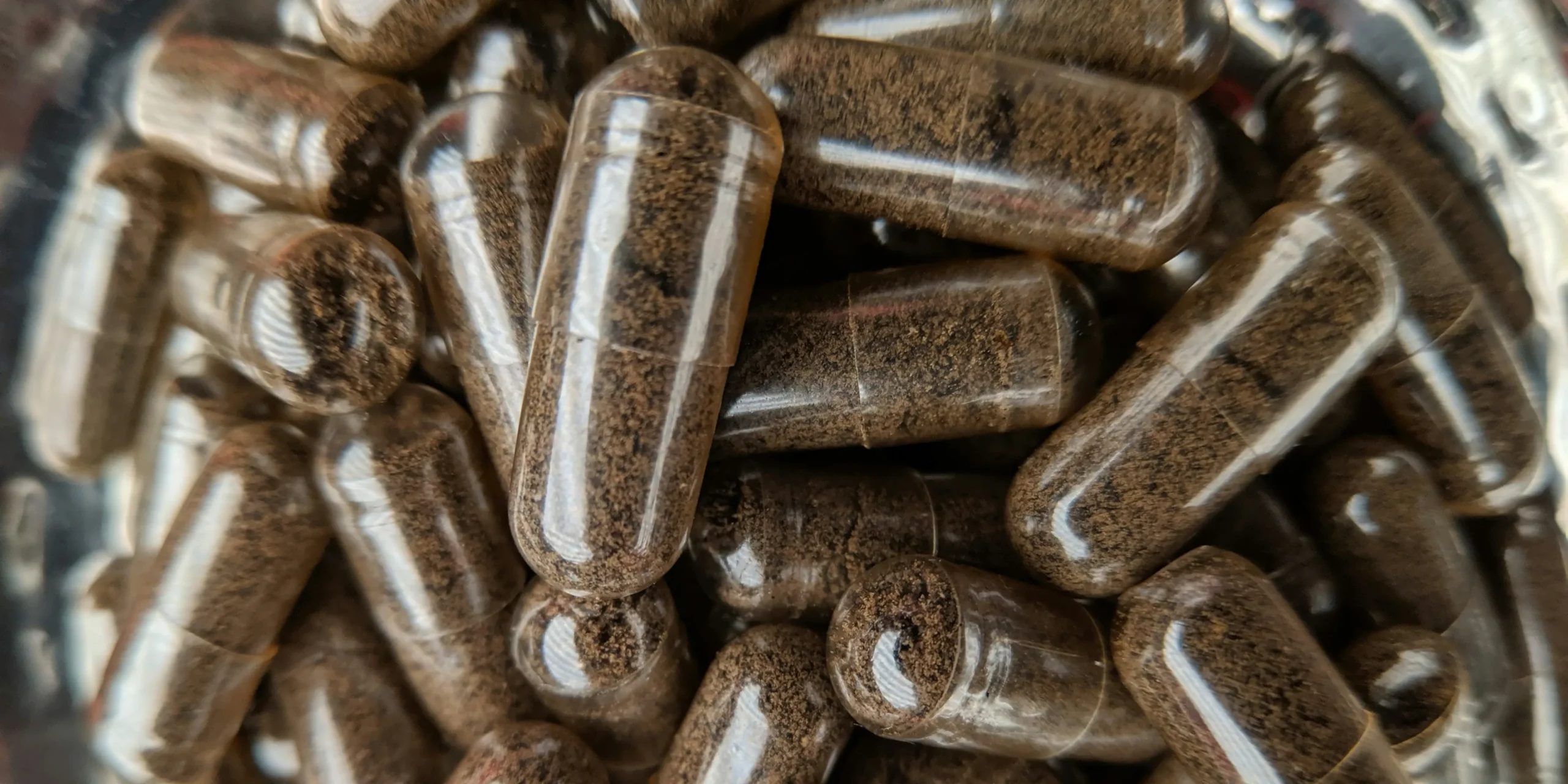
Clean label is influenced not only by the active ingredient itself, but also by the delivery system. Capsule shell type, sweetening approach, coating systems, flavours, colours, and anti-caking strategies can all affect whether the final product still appears simple and natural to the market. For that reason, format decisions should be evaluated alongside ingredient sourcing, not after it.
At the same time, format has to work technically. European buyers still need to protect stability, shelf life, dosage accuracy, and consumer usability. The strongest clean label products are not the ones that remove the most components, but the ones that simplify intelligently without undermining compliance or performance.

How to buy smarter for Europe
The best clean label strategies usually begin before formulation is locked. Buyers should request specifications, compliance information, and regulatory context early, so marketing, regulatory, procurement, and product development teams are working from the same assumptions. That reduces the risk of building a concept around an ingredient that later proves difficult to claim, difficult to justify, or difficult to place across multiple European markets.
It also helps to define what “clean label” means internally before sourcing begins. For one brand, that may mean no artificial colours and a short ingredient list. For another, it may also include plant-based delivery systems, traceable botanical sourcing, limited excipient use, or a stricter position on processing methods. The more clearly those requirements are written into the sourcing brief, the easier they are to enforce.
Conclusion
Clean label in Europe is not just a packaging style. For supplement and nutraceutical brands, it is a sourcing, formulation, and compliance strategy. Ingredient buyers who understand the EU framework for food supplements, claims, additives, and novel foods can build products that are both commercially attractive and regulatorily sound.
For B2B buyers, the key takeaway is simple: natural sourcing and clean positioning can support growth in Europe, but only when buyers back them with solid documentation, regulatory fit, and disciplined formulation choices. In this market, brands achieve the strongest clean label results when they build trust, transparency, and compliance into the ingredient brief from the start.
If you are sourcing ingredients for Europe, focus on partners who can support more than just supply. Look for suppliers who provide clear documentation, traceability, and regulatory alignment from the start.
At Klee Deutschland, we work closely with B2B brands to deliver ingredients backed by transparent sourcing, full technical documentation, and support for EU compliance requirements. Explore our portfolio at Klee MUS to see how we can support your next formulation.
References
European Commission. (n.d.). Food supplements. Retrieved March 31, 2026, from https://food.ec.europa.eu/food-safety/labelling-and-nutrition/food-supplements_en
European Commission. (n.d.). Nutrition and health claims. Retrieved March 31, 2026, from https://food.ec.europa.eu/food-safety/labelling-and-nutrition/nutrition-and-health-claims_en
European Commission. (n.d.). EU register of nutrition and health claims. Retrieved March 31, 2026, from https://food.ec.europa.eu/food-safety/labelling-and-nutrition/nutrition-and-health-claims/eu-register-health-claims_en
European Commission. (n.d.). Novel food. Retrieved March 31, 2026, from https://food.ec.europa.eu/food-safety/novel-food_en
European Commission. (n.d.). Novel food status catalogue. Retrieved March 31, 2026, from https://food.ec.europa.eu/food-safety/novel-food/novel-food-status-catalogue_en
European Commission. (n.d.). Union list of novel foods. Retrieved March 31, 2026, from https://food.ec.europa.eu/food-safety/novel-food/authorisations/union-list-novel-foods_en
European Commission. (n.d.). Food additives. Retrieved March 31, 2026, from https://food.ec.europa.eu/food-safety/food-improvement-agents/additives_en
European Commission. (n.d.). Food additives database. Retrieved March 31, 2026, from https://food.ec.europa.eu/food-safety/food-improvement-agents/additives/database_en
European Parliament and Council of the European Union. (2002). Directive 2002/46/EC on the approximation of the laws of the Member States relating to food supplements. Retrieved from https://eur-lex.europa.eu/eli/dir/2002/46/oj/eng
Innova Market Insights. (2025, October 9). Clean label trends in Europe. https://www.innovamarketinsights.com/trends/clean-label-trends-in-europe/